
Many women today are navigating fertility concerns while balancing demanding lifestyles, stress, and underlying hormonal conditions. Delayed conception, irregular cycles, or a diagnosis like PCOS can quietly create uncertainty even before pregnancy planning begins. If these thoughts feel familiar, you are not alone.
Research published by the National Library of Medicine highlights that India contributes significantly to the global infertility burden. National survey insights suggest that fertility challenges among women of reproductive age are rising, particularly in urban populations where lifestyle and metabolic factors play a key role.
- 25% of the global infertility burden is carried by India alone
- 1 in 6 women of reproductive age face fertility challenges in India, as per UNFPA India Insight
- 40% of female infertility cases are linked to ovulation disorders like PCOS
The encouraging reality is that fertility is not only dependent on medical intervention. Daily nutrition plays a powerful role in supporting hormonal balance, egg quality, and uterine health.
Modern research and ancient Ayurvedic wisdom both arrive at the same conclusion: food is not just fuel. For a woman’s reproductive system, food is medicine. The right foods build healthy eggs, balance hormones, support the uterus, and prepare the body for conception. The wrong foods do the opposite, quietly, over time, without obvious symptoms, until fertility becomes difficult.3
This guide brings together the Ayurvedic perspective on fertility nutrition, not as a list of superfoods to add to your morning smoothie, but as a genuine understanding of how food, digestion, and reproductive health are all deeply connected. If you are a woman in your 20s, 30s, or 40s who wants to protect or improve her fertility, this is the most important guide you can read today.
Why Ayurveda Connects Food Directly to Fertility
In Ayurveda, the body builds and nourishes itself through a chain of seven tissues called Saat Dhatus. Each tissue is formed from the one before it.
The chain starts with the food you eat, which becomes nutrients in the blood, which then nourishes muscle, fat, bone, marrow, and finally the seventh and most refined tissue: Shukra Dhatu, the reproductive tissue.
This means that reproductive health is the final result of everything you eat and how well your body digests it.
If any link in that chain is weak because of poor food choices, poor digestion, or too much stress, it shows up in your fertility last. By the time it does, the root cause has often been present for months or even years.
The key insight:
Ayurveda does not treat fertility as an isolated problem. It treats it as a reflection of your overall health. Which is why the right food is not just helpful for conception, it is foundational.
At the center of this framework is Agni – your digestive fire. Strong Agni means food is properly absorbed and converted into healthy tissue.
Weak Agni means even good food gets poorly absorbed, leading to a build-up of toxins called Ama, which block the body’s channels and disrupt hormonal signals. This is why two women can eat the same food and have very different results.
Female fertility is closely connected to daily nutrition patterns. Both modern science and Ayurveda recognise that food influences hormonal balance, metabolic function, and reproductive tissue health.
Key ways diet supports fertility include:
- Hormonal balance support: Nutrient-rich foods help regulate estrogen, progesterone, and insulin, essential for regular ovulation.
- Egg quality protection: Antioxidants and healthy fats help protect egg cells from oxidative stress.
- Reproductive tissue nourishment: In Ayurveda, fertility depends on the strength of Artava Dhatu, which develops through proper digestion and nutrition.
- Uterine health improvement: Iron and mineral-rich foods support healthy blood flow to reproductive organs.
- Metabolic stability in PCOS: Balanced nutrition helps manage insulin resistance and cycle irregularity.
- Stress and inflammation reduction: Fertility-supportive diets help stabilise metabolic and hormonal responses to stress.
Because of this, Ayurvedic fertility care often begins with dietary correction before other therapeutic interventions.
Top Fertility Boosting Foods According to Ayurveda
Ayurveda classifies fertility-supporting foods into two broad categories: those that nourish all tissues broadly (Bringhana foods) and those that specifically strengthen reproductive tissue (Vrishya foods). Below are the most important ones, explained in plain terms.
Warm Milk with Saffron, Ashwagandha, or Shatavari
Full-fat cow’s milk consumed warm is one of the most deeply nourishing foods for the female reproductive system in Ayurveda. It directly builds Artava Dhatu (female reproductive tissue) and supports healthy hormonal secretion.
Adding a pinch of saffron (kesar) is a centuries-old practice for improving egg quality and uterine health. Adding Shatavari powder makes it one of the most effective natural fertility tonics available. Drink it warm, ideally at night, never cold from the fridge.
Ghee (Clarified Butter)
Ghee is considered Rasayana (rejuvenating) in Ayurveda. It nourishes all seven dhatus, lubricates the reproductive organs, supports healthy estrogen metabolism, and is one of the few foods that directly strengthens Ojas, the body’s vital essence that determines immunity, glow, and reproductive vitality.
Use a teaspoon of ghee in dal, with roti, or in your morning meal. It is especially important for women with dry skin, irregular or scanty periods, or anxiety-driven hormonal issues, which are all signs of excess Vata dosha.
Shatavari (Asparagus racemosus)
If there is one herb-food that every Ayurvedic practitioner recommends for female fertility, it is Shatavari. Known as the Queen of Female Herbs, it supports hormonal balance, improves ovulation, nourishes the uterine lining, and reduces the impact of stress on the reproductive system.
It can be taken as a powder mixed in warm milk, as a churna, or as a supplement under the guidance of an Ayurvedic doctor. It is particularly beneficial for women with PCOS, irregular cycles, or low AMH (ovarian reserve).
Soaked Almonds, Walnuts, and Sesame Seeds (Til)
Nuts and seeds are rich in healthy fats, zinc, selenium, and Vitamin E, all critical nutrients for egg health and hormonal production. In Ayurveda, almonds soaked overnight and consumed in the morning are a classic Ojas-building food.
Black sesame seeds (kala til) are especially valued for strengthening uterine health and are used in many traditional postmenstrual replenishment protocols. A small handful of mixed soaked nuts in the morning is one of the simplest upgrades you can make to a fertility diet.
Urad Dal (Black Gram) and Cooked Lentils
Urad dal is one of the few plant-based foods that Ayurveda specifically classifies as Vrishya, meaning it directly supports reproductive tissue. Cooked with gentle spices like cumin, turmeric, and fennel, it becomes both nourishing and easy to digest.
Lentils and legumes in general are excellent sources of folate (Vitamin B9), which is critical for egg development and early pregnancy health. Avoid eating them raw or undercooked, as this weakens digestion rather than supporting it.
Sweet Juicy Fruits: Pomegranate, Mango, Dates, and Figs
Fruits with a sweet, nourishing quality are considered ideal for building Artava Dhatu. Pomegranate (anar) is particularly valued in Ayurveda for improving blood flow to the uterus and supporting endometrial health.
Dates and figs are rich in iron, calcium, and natural sugars that build strength and reproductive tissue. Mangoes in season are considered one of the most Ojas-building fruits available. These fruits are best eaten at room temperature, not cold, and ideally not mixed with other food groups.
Leafy Greens, Beets, and Cooked Vegetables
Spinach, methi (fenugreek leaves), palak, and other dark greens are rich in iron, folate, and antioxidants that protect egg quality. Beetroot is known to support blood production and uterine lining health.
In Ayurveda, vegetables are almost always recommended cooked rather than raw for women with fertility concerns, as cooked food is easier to digest and produces less Ama (toxins). A well-seasoned sabzi with cumin, coriander, and a drizzle of ghee is more fertility-supportive than a cold salad.
Fertility Spices: Turmeric, Cumin, Fennel, and Cinnamon
Spices are not just flavoring in Ayurvedic nutrition. They are Deepaniya, meaning they kindle the digestive fire and ensure food is properly absorbed. Turmeric (haldi) reduces uterine inflammation and supports healthy hormone signaling. Cumin (jeera) is considered purifying for the reproductive organs.
Fennel (saunf) supports hormonal balance and reduces bloating, which is common in hormonal imbalance. Cinnamon is now well-researched for its role in improving insulin sensitivity, which is directly relevant for women with PCOS.
Insights: Fertility Nutrition
Cureus Journal of Medical Science indicates that oxidative stress and micronutrient deficiency can significantly affect egg quality and hormonal balance. Studies suggest that antioxidant-rich diets may support improved reproductive outcomes in women experiencing fertility challenges.
Foods That Quietly Harm Female Fertility
Knowing what to eat is half the picture. Knowing what to avoid, especially foods that seem harmless but silently disrupt hormones, is equally important. Here is a list of foods that negatively affect female fertility:
| Food or Habit | Why It Affects Fertility |
| Refined sugar and maida, white flour | Spikes in insulin levels worsen PCOS, disrupt LH and FSH hormonal balance, and increase uterine inflammation |
| Cold, refrigerated, and raw foods are eaten regularly | Weakens digestive Agni, reduces nutrient absorption, and increases Vata, which may affect ovulation regularity |
| Excess caffeine, more than one cup per day | Raising the cortisol stress hormone restricts uterine blood flow and may disrupt progesterone balance |
| Packaged and processed foods with preservatives | May contain chemicals acting like synthetic estrogens, interfering with natural hormonal communication |
| Leftover or reheated food | Considered low in Prana, vital energy increases Ama toxins and reduces overall nourishment quality |
| Excessive spicy or sour foods | Aggravates Pitta dosha, which can influence hormonal balance, ovulation, and cervical mucus health |
A Simple Fertility-Supportive Meal Plan (Ayurvedic Style)
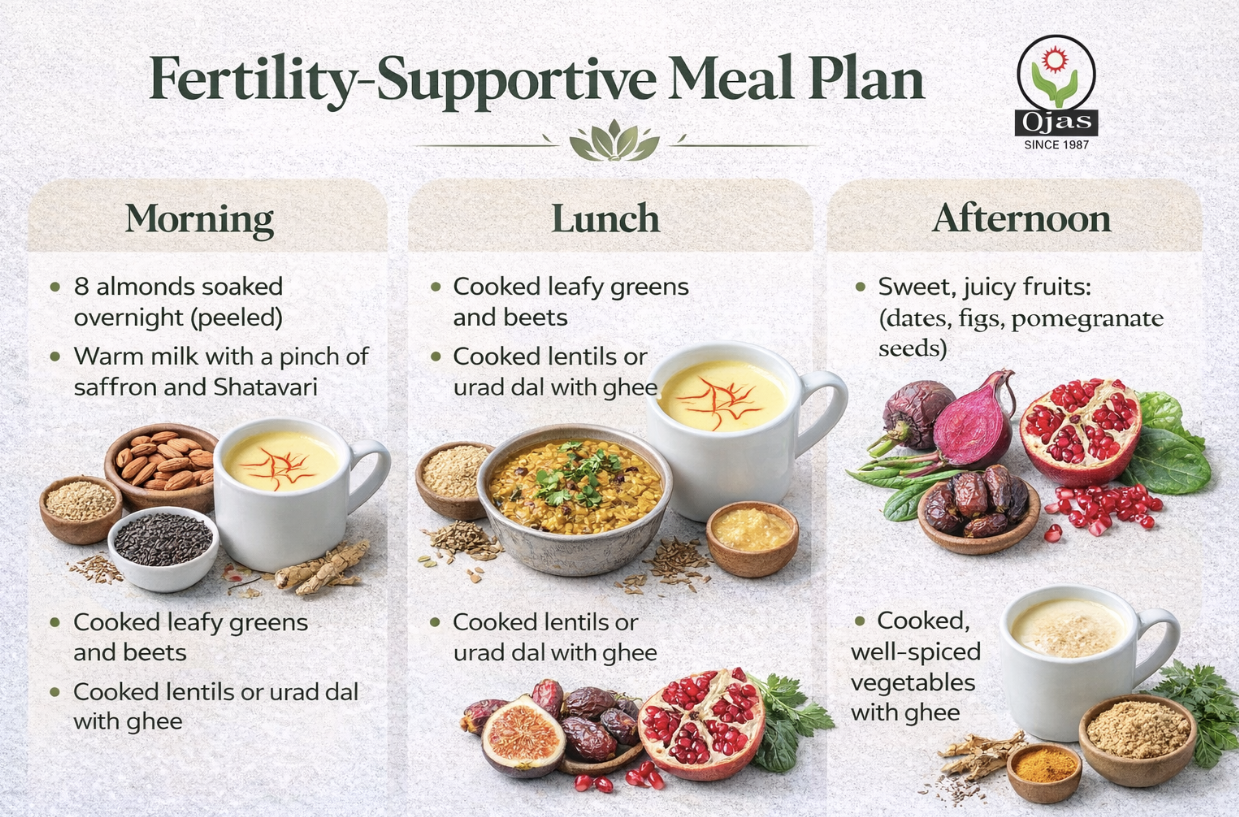
Here is an example of what a day of eating looks like when you are actively working on your fertility with an Ayurvedic approach. This is a personalized plan based on your dosha (body constitution), and a specific condition will always give better results:
| Time | Sample Fertility Day Plan |
| On waking | Warm water with a pinch of turmeric and 4 to 5 soaked almonds |
| Breakfast | Warm cooked oats or ragi porridge with dates and a drizzle of ghee, or steamed idlis with coconut chutney |
| Mid morning | Warm milk with Shatavari powder or a small bowl of seasonal fruit such as mango, pomegranate, or papaya |
| Lunch | Dal preferably urad or masoor with ghee-cooked sabzi and brown rice or roti, this should be the main meal of the day |
| Evening | A small handful of walnuts and figs with saunf, fennel tea, or warm jeera water |
| Dinner | Light khichdi with ghee and turmeric, or warm vegetable soup, keep dinner light and early, before 8 pm |
| Before bed | Warm milk with a pinch of saffron and Ashwagandha or Shatavari powder |
In Ayurveda, all of these things depend on the type of body you have: vatt, pitt, or both. Thus, it is advisable to consult an expert before setting up your diet to avoid any complications or side effects.
You can book an online consultation with Ojas by clicking the link below:
Food Alone is Not Enough: The Three Lifestyle Pillars Ayurveda Insists On
Diet is the foundation, but Ayurveda is clear that food works best when these three lifestyle factors are also in place. Think of them as the conditions the soil needs before a seed can grow.
- Regular sleep before 10 pm: Growth hormone and melatonin, both critical for egg quality, are released only during deep, timely sleep. Disrupted sleep is one of the fastest ways to destabilize hormones, and one of the most overlooked factors in fertility clinics today.
- Stress reduction through daily routine (Dinacharya): Chronic stress elevates cortisol, which directly suppresses the LH surge needed for ovulation. Ayurveda recommends an Abhyanga (self-massage with warm sesame or coconut oil) as a daily ritual to calm the nervous system and reduce Vata aggravation.
- Avoiding excessive exercise or extreme dieting: Both signal the body that it is under threat and suppress reproductive hormones. The Ayurvedic principle is nourishment over depletion. Gentle yoga, walking, and breathing exercises support fertility far better than intense workouts when you are actively trying to conceive.
When to Start a Fertility Nutrition Plan
Fertility-supportive nutrition is beneficial even before active pregnancy planning. Women experiencing irregular cycles, hormonal imbalance, or previous reproductive challenges may benefit from early dietary guidance.
Nutrition planning is also relevant during PCOS management, preconception preparation, and before assisted reproductive treatments. Early intervention often improves long-term reproductive outcomes.
How Ojas Ayurved Supports Female Fertility Naturally
Understanding fertility-supportive foods is only the first step. Real progress comes from applying nutrition and treatment in a way that aligns with your body, hormonal profile, and lifestyle. At Ojas Ayurved, female fertility care is guided by classical Ayurvedic principles focused on identifying root causes and restoring systemic balance.
Our approach includes:
- Personalized Prakriti and Dosha assessment to understand underlying reproductive imbalances
- Customized fertility nutrition plans based on hormonal and metabolic needs
- Targeted herbal formulations such as Shatavari, Ashwagandha, Lodhra, and Kumari were selected case-wise
- Panchakarma detox therapies to support hormonal regulation and reproductive channel cleansing
- Integration with existing medical reports, including PCOS, low AMH, thyroid imbalance, or unexplained infertility
This holistic, root-cause approach aims to improve cycle regularity, hormonal stability, and natural conception potential through structured Ayurvedic care.
Start Your Natural Fertility Journey at Ojas Ayurved
Whether you are just beginning to think about fertility or have been struggling for a while, a clear, personalized plan makes all the difference. Our Ayurvedic fertility specialists are here to help you understand your body and take meaningful steps forward.
Every Tuesday: Free In-Clinic Consultation at Ojas Ayurved. Come in, bring your reports, and let us talk.