
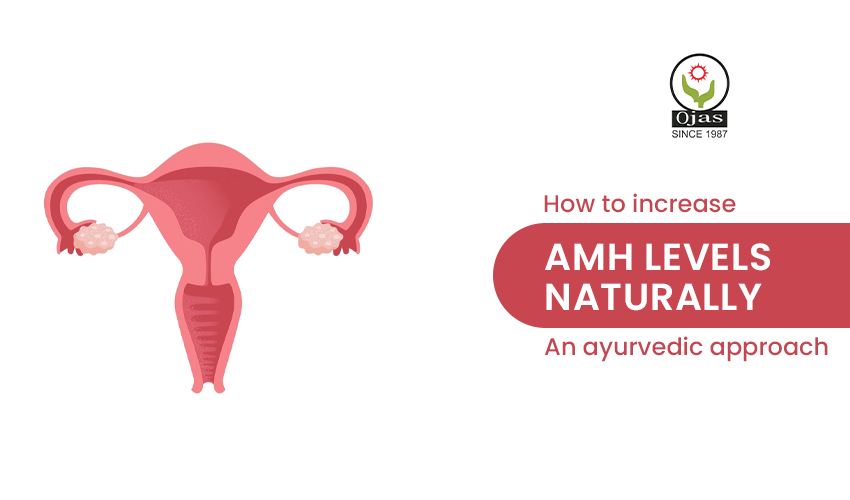
What is Anti-Mullerian Hormone (AMH)?
AMH In females
- AMH is a hormone produced by ovaries and it indicates a woman’s ovarian reserve.
- During female fetus development, AMH level is very low and plays a key role in developing female sex organs.
- AMH levels keep on increasing in girls from birth, are at peak around the age of 25 years, and then start declining with increasing age.
- AMH levels can be evaluated via a blood test to determine the ovarian reserve.
- Normal AMH level in women of reproductive age is between 1.0 – 4.0 ng/ml.
- In women of reproductive age, a low level of AMH suggests the onset of early menopause, while a high level of AMH is indicative of polycystic ovarian disease (PCOD).
- The level of AMH remains constant throughout the menstrual cycle, allowing for blood samples to be collected at any time.
– AMH level > 3.5 ng/ml : good, adequate egg supply, good egg quality, and good chances of conception.
– AMH level=1.0-3.0 ng/ml : low normal, favourable egg supply and chances of conception.
– AMH level < 1.0 ng/ml : very low ovarian reserve and limited chances of conception.
– AMH level < 0.6 ng/ml : undetectable, might need treatment.
- AMH level can indicate a number of things including:
- Egg count: AMH levels indicate a number of eggs remaining in ovaries.
- Ovary aging: Low AMH levels may indicate ovaries are aging faster than normal.
- Menopause: Low AMH level may indicate the early beginning of menopause.
- Fertility drug response: indicates how well a woman responds to fertility drugs.
AMH In males
- In males, AMH is produced by the testicles.
- Males are born with higher AMH levels than females. In boys peaks at around 6 months of age and then gradually declines until puberty.
- During fetal development, AMH levels are high in male foetuses, causing mullerian ducts to shrink and help in male genital growth.
- Normal AMH level in male – 1.5 – 4.0 ng/dl.
Role of AMH in female fertility
- If the AMH level is low, it suggests fewer eggs are left in the ovary and women may face more difficulty in conceiving.
- However, it is important to note that low AMH levels are not the only factor in fertility.
- Women with low AMH can also conceive and get pregnant with the proper treatment and care.
The causes of low AMH levels are
- Genetic factors: Some women may have a naturally lower ovarian reserve due to genetic predisposition.
- Lifestyle factors: Smoking, excessive alcohol consumption, poor nutritional diet and lack of exercise may have a negative impact on AMH levels.
- Age: With advancing age in women, there is a decline in the number of available eggs, which leads to reduced levels of AMH.
- Medical conditions: Like PCOS, endometriosis, and some autoimmune disorders may affect AMH levels.
- Stress: Stress, anxiety and depression can also disrupt hormonal balance and affect AMH levels.
Ayurvedic perspective on low AMH levels
- In ayurveda, reproductive health is governed by the shukra dhatu.
- Shukra dhatu is compared to male and female reproductive systems and its secretions (semen, sperm and ovum).
- A balanced shukra dhatu in females (good ovarian reserve) is essential for fertility.
- When the reproductive system is imbalanced due to unhealthy lifestyle, poor diet and excessive stress, it can lead to reproductive tissue harm.
Boost your fertility naturally
Ayurvedic treatments play a crucial role in managing low AMH levels; but even there are natural approaches that can also effectively improve AMH levels and boost fertility.The level of AMH cannot be directly elevated; however, it is possible to enhance overall and reproductive health.
Here are some helpful steps, which women can take to boost AMH levels:
1.Diet and nutrition:
- There is no specific food that can directly increase AMH levels, but eating a balanced diet rich in fat, protein, vitamins and minerals and antioxidants can support ovarian health and improve AMH levels.
- Foods that may include:
- Healthy fats: Omega-3-fatty acids from ghee, egg, fish, sea foods, nuts and seeds.
- Plant based proteins: Soybean, black gram, chickpeas,peanuts, almonds, chia seeds, and potatoes.
- Vitamin D: Fortified dairy products, egg yolks, fatty fish.
- Dietary fibres: Whole grains, vegetables, fruits and sprouts.
- Antioxidants: Grapes, berries, fig, cherries, oranges, apricots, mango, watermelon, papaya and tomatoes.
2.Lifestyle changes:
Certain lifestyle factors may also affect AMH levels and fertility.
- Quit habits: The intake of tobacco, alcohol, and the act of smoking negatively influence AMH levels and result in a decrease in ovarian reserve.
- Quit unhealthy diet: Try to avoid food that is high in sugar, saturated fat and high in salt but low in vitamins, minerals and fibres which include: processed meat, potato chips, french fries, cakes, soda, soft drinks, bread and burger etc.
- Reduce stress: High levels of stress can have a negative impact on fertility. To manage stress one should regularly practice yoga and meditation.
- Exercise regularly: Regular physical activity promotes hormonal balance and ovarian health.
Herbal remedies to Increase AMH Levels Naturally
- Ayurveda recommends several herbs to support reproductive health, nourish shukra dhatu and boost fertility.
- You can incorporate these herbs into your daily routine under the guidance of ayurvedic practitioners.
- Trifala: It’s made from fruits haritakti, amala and baheda. Trifala may help to improve female infertility and improve hormonal regulation.
- Rasayan churna: It contains guduchi, amala and gokshur. Rasayan churna helps regulate hormones, improves uterine functions and balances doshas.
- Ashwagandha: Ashwagandha, an ayurvedic herb, may help increase AMH levels, balance hormones, stress reduction and improve ovarian function.
- Shatavari: Shatavari may nourish the reproductive system and improve ovarian function.
- Gokshur: May help regulate hormonal balance.